
Jev in medicine: a valid answer can still be wrong
Structured output is not clinical accuracy. A clinician reviews Jev, BAA uncertainty, and locally runnable alternatives.
Short essays and professional commentary on limb preservation, diabetic foot care, pediatric and reconstructive foot and ankle surgery, and the clinical realities that determine whether new technology actually helps patients.
A home base for longer-form posts, DF Blog guest pieces, and LinkedIn-linked clinical commentary.
Structured output is not clinical accuracy. A clinician reviews Jev, BAA uncertainty, and locally runnable alternatives.
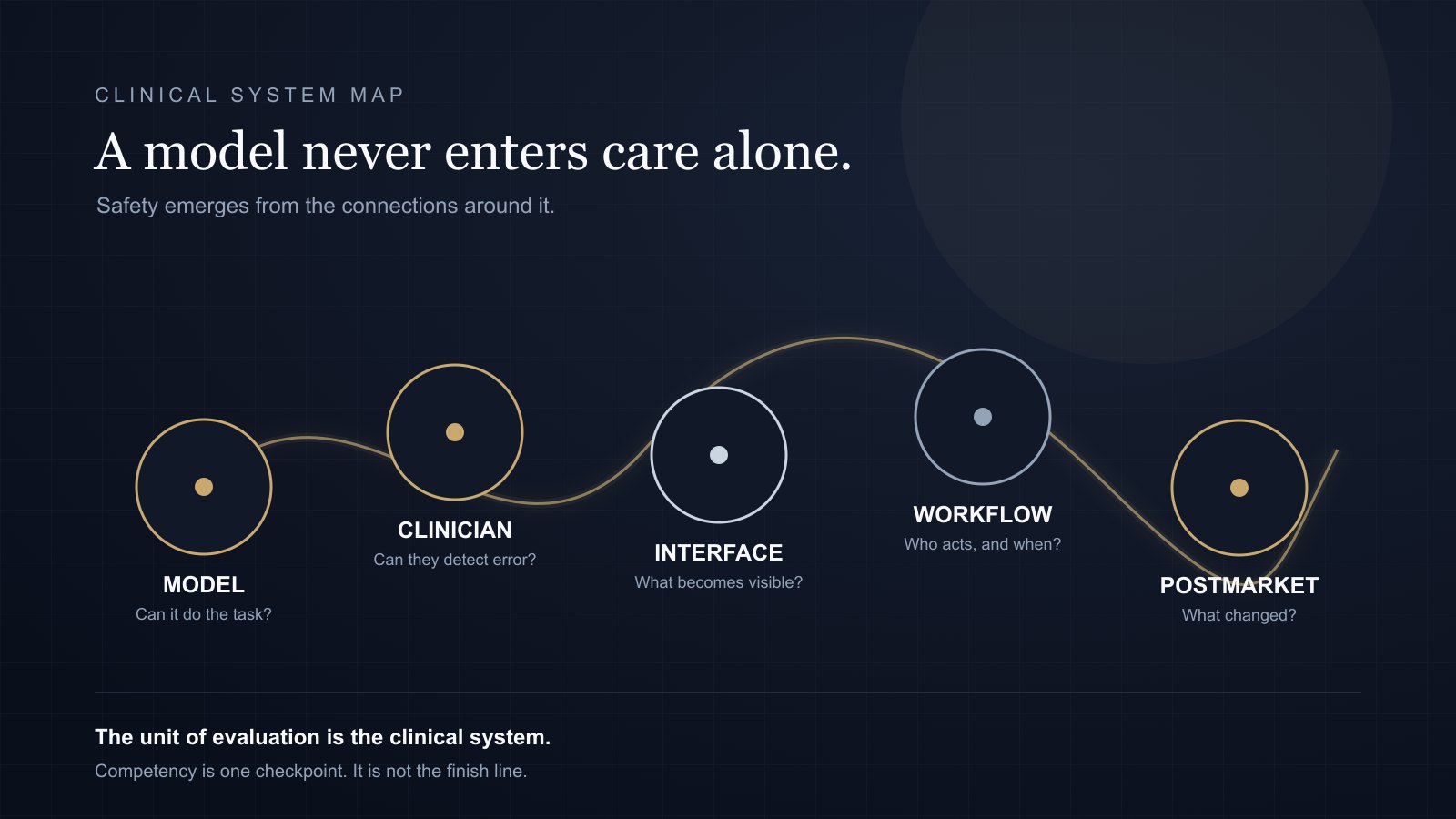
The FDA's proposed physician-style competency tests are a useful checkpoint. Clinical safety still depends on the model, clinician, interface, workflow, and what changes after deployment.
Claude's watermark can suggest model involvement. It cannot establish authorship, accuracy, originality, or responsibility.
A blank field is not a normal finding. Clinical AI must preserve the difference between absent, unassessed, and negative information.
Anthropic’s program may give rare-disease teams more computational room. A physician’s view of what that helps and what medicine still has to prove.
The AI assistant is useful enough to want, but still too easy to misuse when clinic is moving.
A patient-facing piece on using AI chat tools without casually handing over a whole chart, portal thread, medication list, or photo.
A DF Blog guest piece on the clinician signature, verification burden, and what medical AI asks physicians to trust.
Writing from the clinical middle: real patients, paperwork, uncertainty, and the gap between an impressive demo and work that survives clinic.
Writing about the small operational details that decide whether a limb salvage plan actually closes.
The question is not whether the demo works. It is whether the output survives the room, the record, the staff workflow, and the signature.
Practical commentary from a clinician who lives with the paperwork, liability, follow-up loops, and patient stakes.